
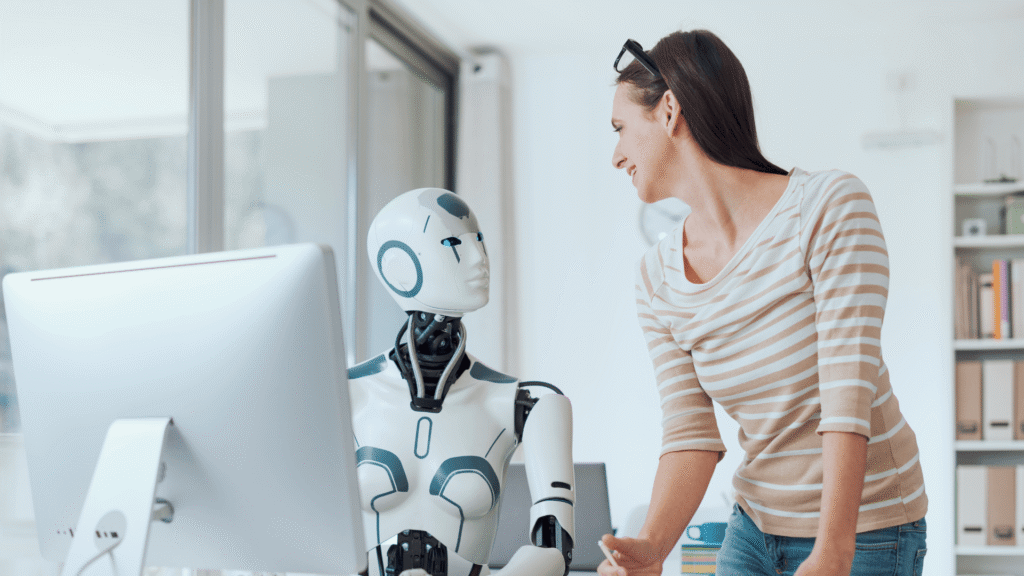

Artificial intelligence (AI) can help California businesses work faster, save money, and stay competitive. But as useful as these tools are, they also come with serious responsibilities—especially in a state known for some of the strictest privacy and consumer protection laws in the country.
Understanding the risks and liabilities of using AI for business in California is no longer optional. Whether you run a local shop, a growing startup, or a professional service firm, the decisions your AI tools make can create real legal, financial, and operational problems if something goes wrong.
Below are the biggest issues every California business should keep in mind—plus the types of insurance coverage that can help protect you.
1. AI Mistakes Can Create Real Business Liability In California
AI tools are powerful, but they aren’t perfect. They can produce wrong answers, misleading content, or biased recommendations. In a state like California—where consumers have strong legal rights—those mistakes can quickly turn into a liability.
For example:
- A Sacramento real estate agency uses AI to write property descriptions. If the AI includes incorrect details, the buyer could claim “false advertising.”
- A Los Angeles accounting service uses AI to check tax errors. If the AI misses an important detail and the client gets fined, the business may be held responsible—not the AI provider.
Under California law, the business using the AI is typically the one on the hook, even if the AI tool caused the error.
Helpful coverage:
- Errors & Omissions (E&O) insurance can help cover claims from clients who say your professional work caused them financial harm.
- Technology E&O endorsements offer added protection if AI or automated tools play a major role in your operations.
2. California’s Privacy Laws Make AI Data Mistakes Expensive
California’s privacy rules—especially the California Consumer Privacy Act (CCPA) and the California Privacy Rights Act (CPRA)—are some of the strongest in the United States. These laws give residents more control over how their personal information is collected, stored, and shared.
If your AI system mishandles customer data, California regulators can issue steep fines.
Common risks include:
- Uploading customer info into an AI chatbot without consent
- AI tools storing data in unsecured systems
- AI algorithms “learning” from private data that wasn’t meant to be used for training
Businesses have been fined up to thousands of dollars per violation under California privacy rules. Even a small mistake can add up fast.
Helpful coverage:
- Cyber liability insurance can help pay for data breach costs, legal defense, notification expenses, and regulatory fines where allowed by law.
3. Bias, Discrimination, And Employment Risks Are Growing
California has strong anti-discrimination laws. If your AI tools are involved in hiring, evaluating, or screening employees, you must be extremely careful.
Why? Because AI systems sometimes show bias based on gender, race, age, or disability—even when that wasn’t the intention.
Examples:
- An AI hiring tool favors applicants from certain ZIP codes
- A resume screener undervalues applicants with “non-traditional” experience
- A scheduling AI creates shifts that unintentionally disadvantage certain groups
In California, biased outcomes—even accidental ones—can create workplace discrimination claims.
Helpful coverage:
- Employment Practices Liability Insurance (EPLI) helps protect your business from discrimination, wrongful hiring, and workplace claims linked to unfair practices.
4. AI Cyber Threats Are Increasing Across California Businesses
AI can help your business run more smoothly—but it also gives cybercriminals new tools to attack. California businesses already face the highest average cost of a data breach in the U.S., with some incidents costing over $9 million on average, according to IBM’s 2023 report.
AI makes it easier for attackers to:
- Create convincing phishing emails
- Imitate a CEO’s voice (deepfake fraud)
- Break into systems through automated password cracking
If your business uses AI without strong cybersecurity, you could face long downtime, lost money, and angry customers.
Helpful coverage:
- Cyber liability insurance
- Business interruption insurance to help cover lost income after an attack
- Data restoration coverage to help rebuild damaged digital systems
5. California Regulators Are Increasingly Watching AI Use
California is pushing toward stronger AI regulation. In recent years, the state has introduced or considered laws related to:
- Transparent AI decision-making
- AI safety testing
- Protection against automated discrimination
- Requirements for businesses using AI in hiring or customer service
This means future lawsuits or penalties may become more common if businesses fail to supervise how AI tools operate.
Businesses should:
- Keep clear records of how AI tools are used
- Avoid giving AI full control over decisions that affect people
- Review AI output for accuracy, fairness, and safety
- Establish written internal policies for AI use
How California Businesses Can Protect Themselves
While AI offers huge advantages, it also creates new exposures. To reduce the risks and liabilities of using AI for business in California, companies should:
- Train employees on safe, legal AI usage
- Avoid entering sensitive customer data into AI systems
- Use security tools like multi-factor authentication
- Regularly audit AI outputs for mistakes or bias
- Make sure your insurance covers AI-related exposures
A strong insurance portfolio usually includes:
- Errors & Omissions (E&O)
- Cyber liability insurance
- Technology E&O endorsements
- Employment Practices Liability (EPLI)
- General liability for broader protection
Bottomline
AI can be a game-changer for California businesses, but it also brings new responsibilities that many owners don’t see coming. With the state’s strict privacy rules, strong consumer protections, and fast-evolving regulations, even small AI mistakes can turn into costly legal or financial problems. That’s why every company—from local shops to fast-growing startups—needs to understand the real risks and liabilities of using AI for business in California and put the right safeguards in place.
By reviewing how your team uses AI, training employees, protecting customer data, and carrying the right mix of coverage like E&O, cyber liability, and tech-focused endorsements, you can enjoy the benefits of AI without putting your business at unnecessary risk. In a state as forward-thinking—and highly regulated—as California, staying protected is not just smart. It’s essential.